
Women and the Geography of Fear.
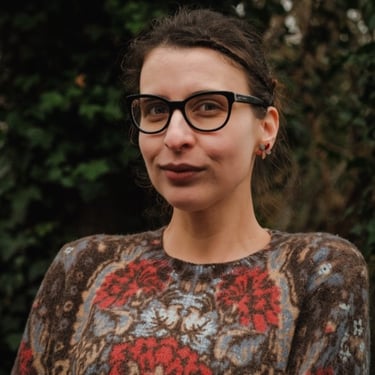
Together with street photographer Craig Nelson [@hillhurst_production] we created a series of portraits of women in places where they feel unsafe, often ordinary streets close to home that quietly force them to change routes or avoid certain areas altogether. This project, “Women and the Geography of Fear,” reflects on how safety is influenced by environmental cues, social context, and lived experience.
Data layer by Alina Ristea
Crime Science & Urban Safety | Turning data into actionable insights
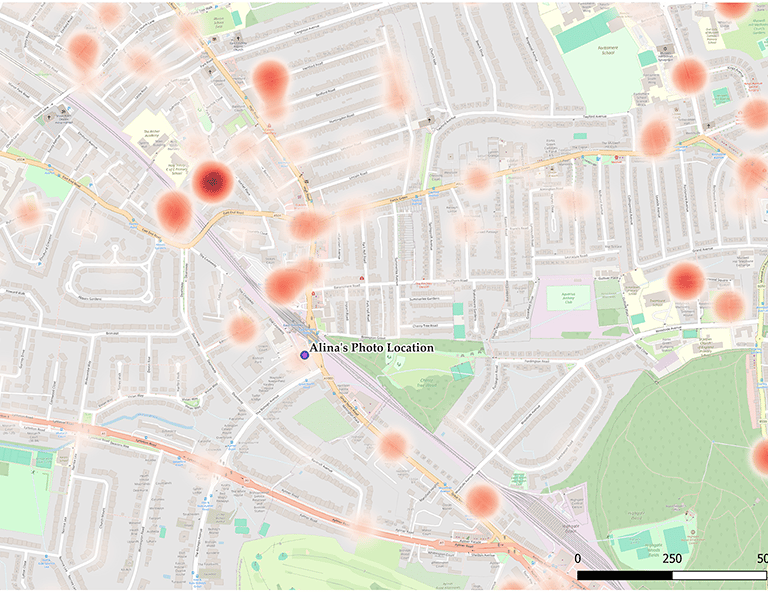
“These maps visualise the spatial distribution of recorded violent crime surrounding each selected location. While some locations overlap with areas of elevated violent crime, others do not. Together, the maps highlight an important insight: perceptions of safety are shaped not only by crime itself, but also by environmental cues, lived experience, urban design, and the everyday realities of navigating cities after dark.”
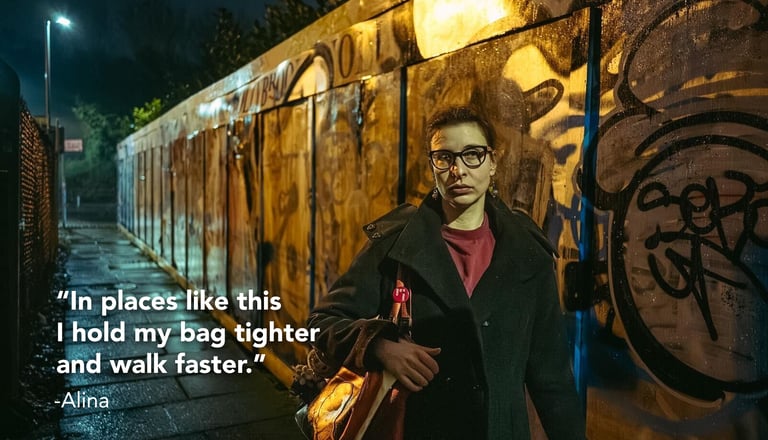
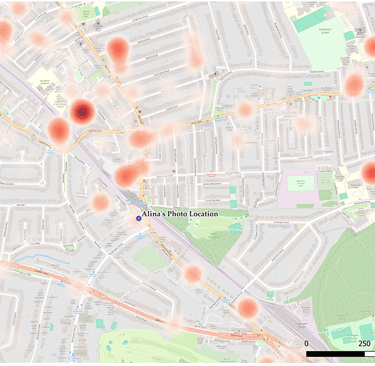
"In places like this I hold my bag tighter, look back once in a while and walk faster. Poor lighting, no visible security, graffiti, and empty streets make every step feel uncertain."
-Alina
Map note by Alina Ristea:
"The selected location sits close to several moderate violent crime concentrations associated with nearby road and transport corridors. Higher-intensity hotspots appear further north-west of the site."
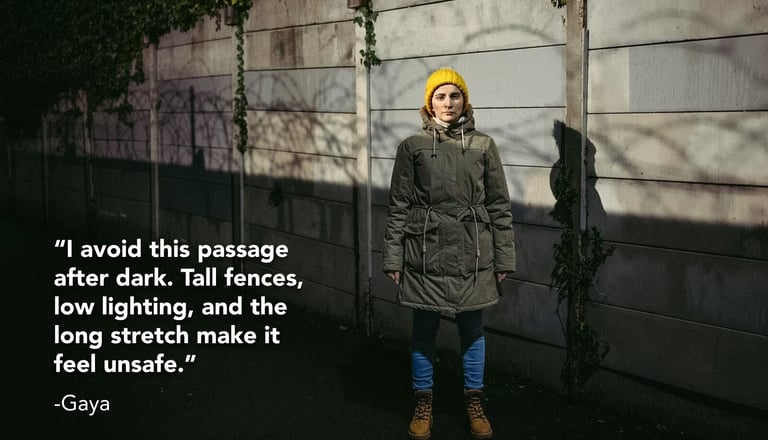
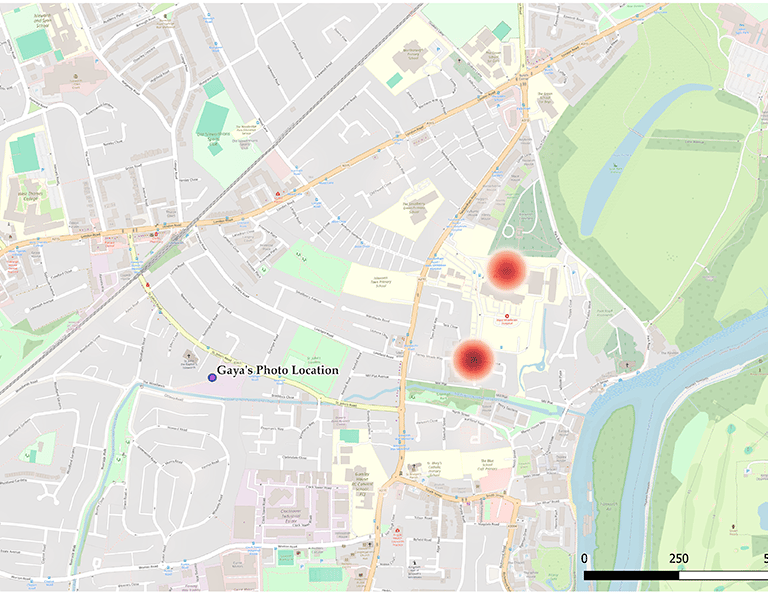
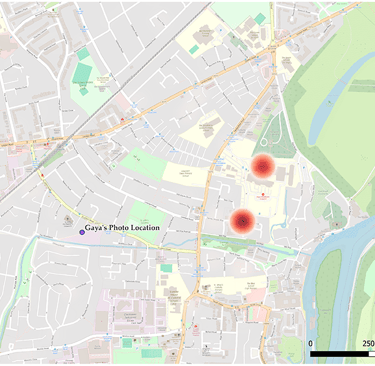
"This passage has been one of the few local places I avoid after dark. Certain qualities of it just don’t allow me to freely use it at certain times of the day, e.g. tall solid fence on both sides providing very low visibility, one side “adorned” with barbed wire, as well as low lighting and the sheer length of the walk makes me imagine all the horrible ways this walk could go wrong."
-Gaya
Map note by Alina Ristea:
"This location is situated in an area with relatively limited violent crime concentration. The nearest visible hotspots appear clustered further east along nearby movement routes."
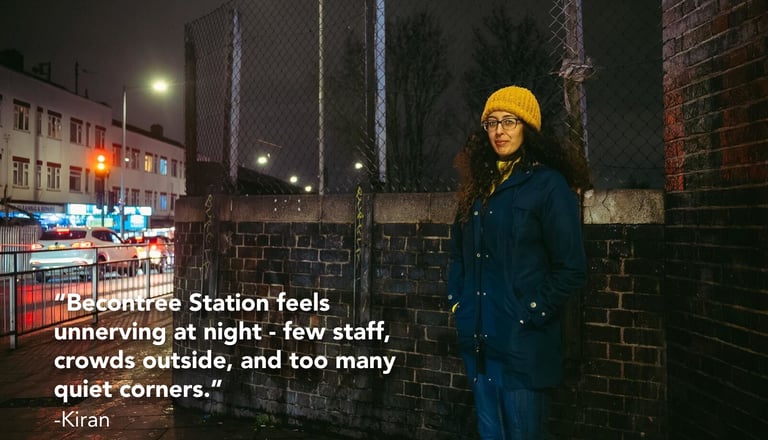
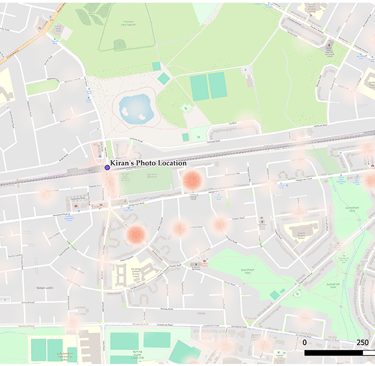
"Becontree Station feels unnerving, particularly at night. There are rarely any staff at the ticket office, and people regularly force their way through the barriers, or wait behind you to follow you through. Its set opposite a small parade of shops, none of which are inviting or places you'd walk into for safety if you needed it.
The co-op has safety glass around the tills, prepared for the worst case scenario.
Large crowds of youths will often hang around outside the station queuing for kebabs. It can feel intimidating walking by so many hoodies.
The station is set on a bridge, with 4 sets of steps leading down to residential streets and a car garage. The perfect spot for a crime to take place, especially when it's less busy at night. A few metres away from the station is park. I often see people lurking around within it at night, not dog walking but drunk. I always cross over to the other side of the road to avoid any potential conflict or unexpected danger."
-Kiran
Map note by Alina Ristea:
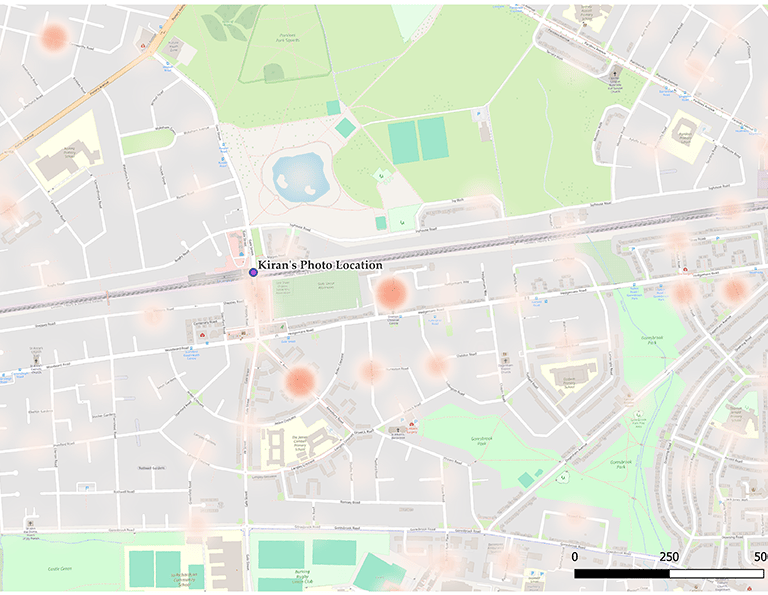
"The surrounding area shows relatively low and dispersed violent crime intensity compared to other exhibition locations. Small concentrations appear along nearby transport and road corridors."
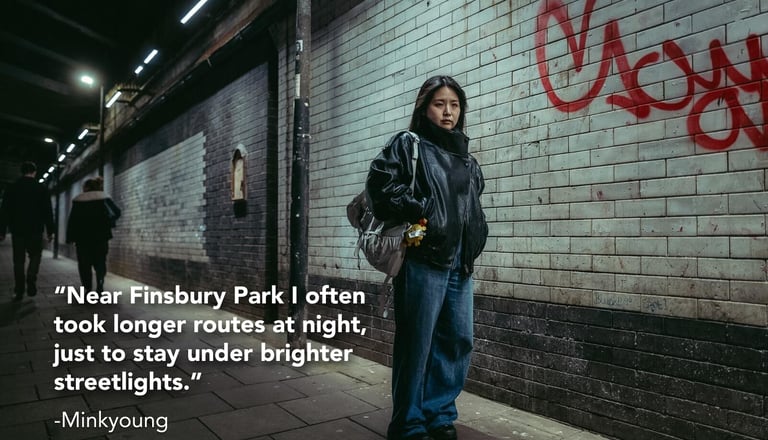
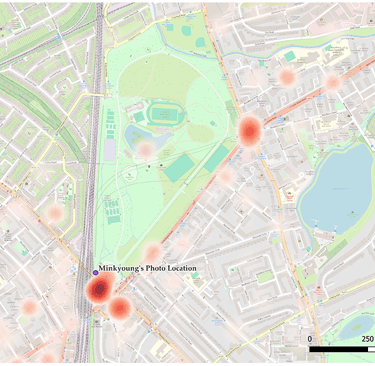
"I lived in the area between Finsbury Park and Manor House stations for about ten months. Even during the daytime it never felt particularly safe, but at night the atmosphere changed completely. The area is known for its high crime rates, and it often felt like situations that clearly needed attention or intervention simply went unresolved. At times, just walking through the neighbourhood could feel intimidating.
The safety conditions around Finsbury Park Underground station are especially poor, arguably among the worst in London. When I told colleagues and professors that I had moved near Finsbury Park, almost all of them warned me that it could be a risky place for a woman to live alone. Fortunately, nothing serious ever happened to me during the ten months I lived there. Still, my daily walk often took me past the smell of rubbish, shards of broken glass scattered on the pavement, and walls covered with angry graffiti. It was enough to make me instinctively tighten my shoulders and stay alert. The safest strategies I could think of were simple ones: returning home during the busiest hours when the streets were full of people, or taking a longer route so I could stay under brighter streetlights."
-Minkyoung
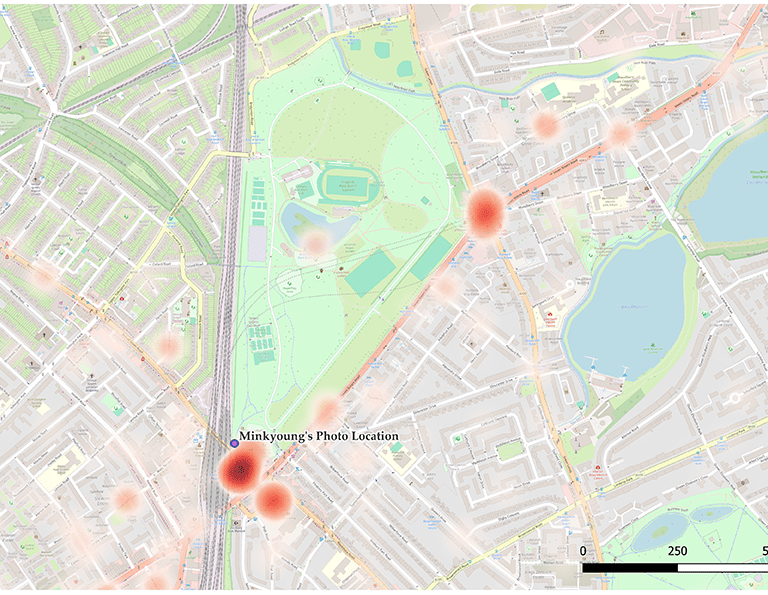
Map note by Alina Ristea:
"The selected location lies close to one of the more visible violent crime hotspots within the surrounding area, concentrated near the nearby transport corridor and road junction in Finsbury Park."
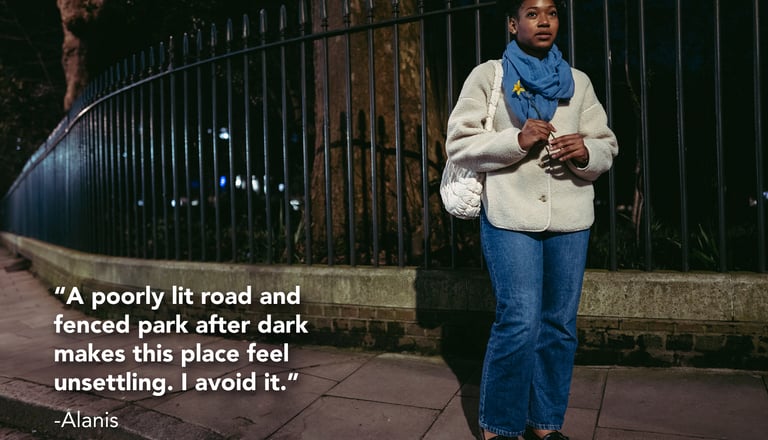
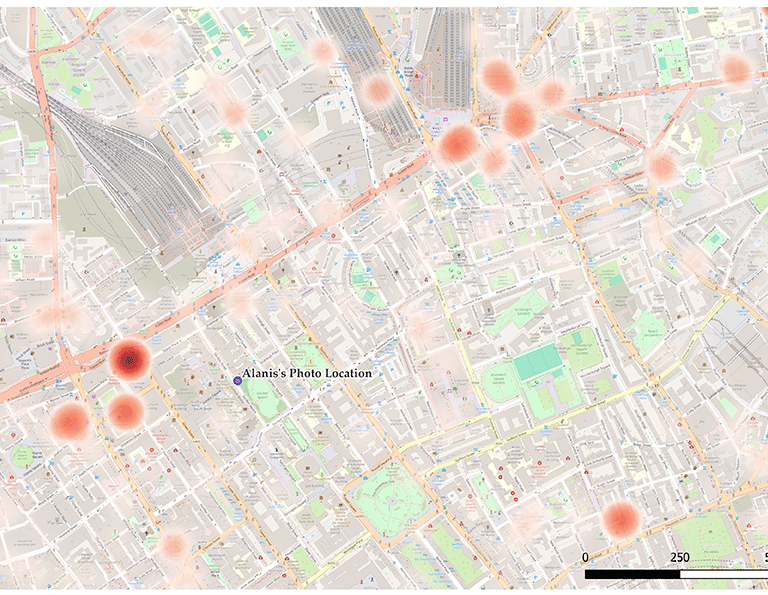
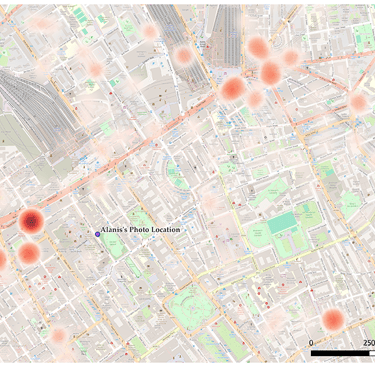
"I avoid walking this road after dark. Unlit streetlight leaves the road too dark, and the fenced park behind it makes it feel unsettling. A few more lights would help."
-Alanis
Map note by Alina Ristea:
"The surrounding area contains several nearby violent crime hotspots, particularly along major roads and central movement corridors. However, the selected location itself is not positioned directly within the highest concentration zone."
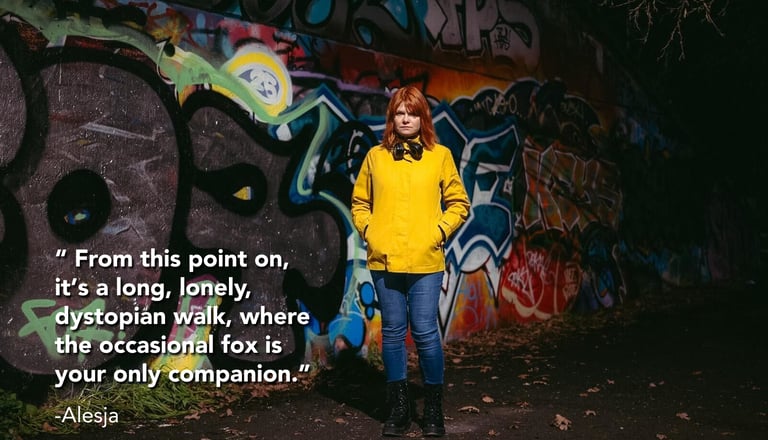
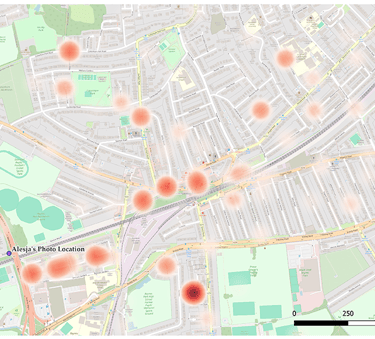
"I do appreciate good street art, and in this tunnel local artists rotate, so new pieces appear almost every week, adding to the slightly dystopian atmosphere.
The real problem is that once you step into this stretch of path, you realise there’s no easy way out for the next 15 minutes. On one side there’s the railway, on the other a golf course, so the only option is forward or back. It’s a lonely walk home where your only companion (if you’re lucky) might be the occasional fox."
-Alesja
Map note by Alina Ristea:
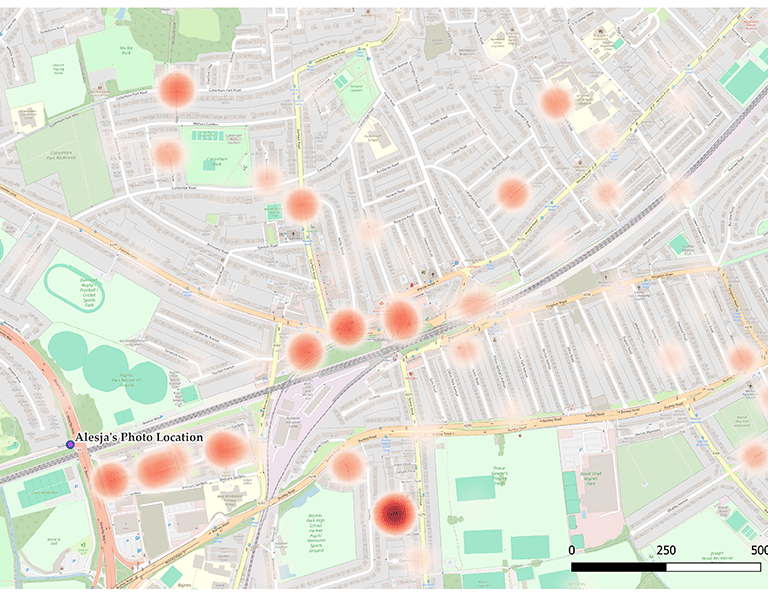
"Violent crime appears dispersed across the wider area, with stronger concentrations emerging further east and south of the selected point. The immediate surroundings show comparatively lower recorded activity."
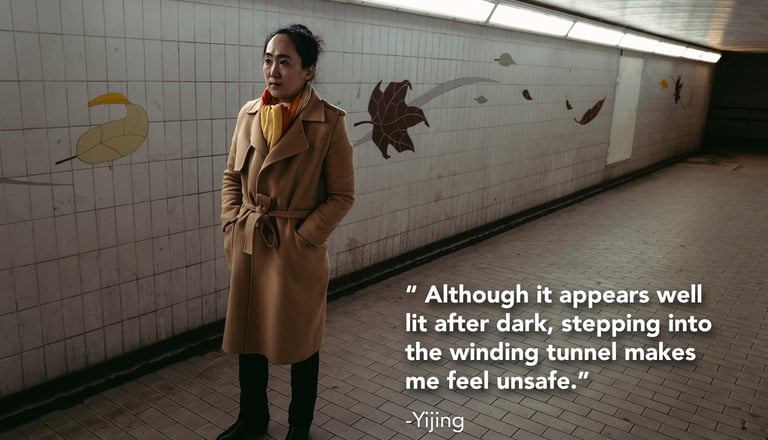
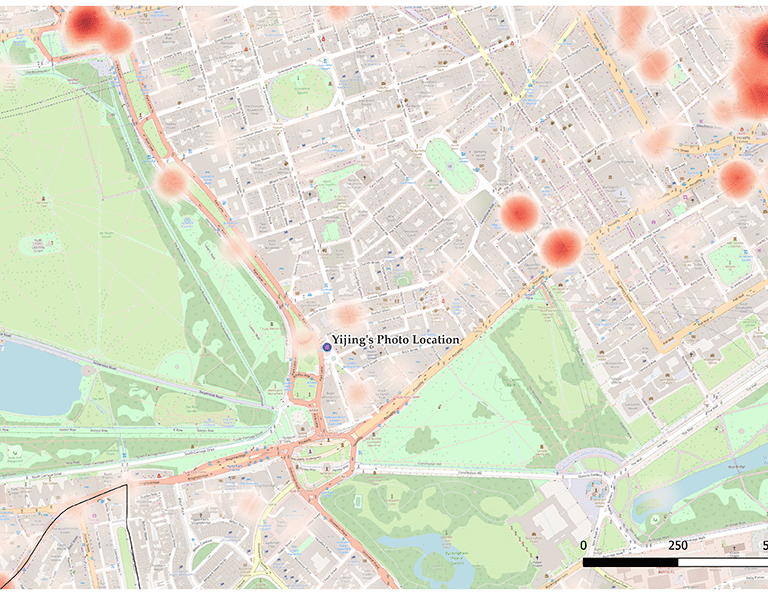
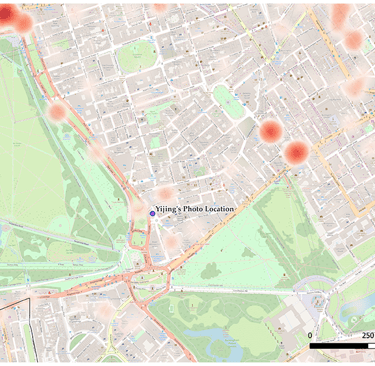
"This pedestrian tunnel is the sole link between the Hyde park corner and the London Hilton hotel side of the busy intersection. It seems well-illuminated after dark, but I feel very unsafe when stepping into the winding tunnel. It is quiet with hum of echoes, sharp curves obscured the path ahead, graffiti on the wall, and the harsh white lighting feels artificial...only the background music from a street musician provides some sense of comfort in the otherwise desolate space."
-Yijing
Map note by Alina Ristea:
"The selected location lies outside the main concentrations of recorded violent crime visible in central London. Nearby hotspots emerge further north and east, while the immediate surroundings show lower recorded activity within this dataset."
Support Safest Way 💜💛
We’re building this to help people feel safer walking home — and keeping it free.
Download Safest Way app, walk smarter, and share your feedback.
We’re building this together.



The map to keep you safe.
Privacy policy
Terms & Conditions
Say hello@safestway.co.uk
And connect with us on social media!
Subscribe to our newsletter!


Copyright (C) 2026 Safest Way. All rights reserved.